The satin with a secret — how the hammered finishing process transforms standard silk satin into a fabric of irregular, artisanal luster that photographs like liquid metal and wears like a second skin
Silk satin is one of the most recognizable luxury fabrics in the world — its smooth, mirror-bright surface and fluid drape have defined formal dressing for centuries. Yet within the satin family, silk hammered satin fabric represents a distinct and captivating evolution of the standard: a fabric that begins as satin weave but is then subjected to a specialized mechanical finishing process that disrupts the uniform alignment of the surface threads, creating an irregular, subtly crinkled luster that reads as simultaneously more casual and more artisanal than flat satin while retaining every gram of the underlying silk's natural luxury. At 19mm, it achieves a weight that gives this textured surface its full body and authority — fluid enough to drape beautifully, substantial enough to hold garment silhouettes with quiet confidence.
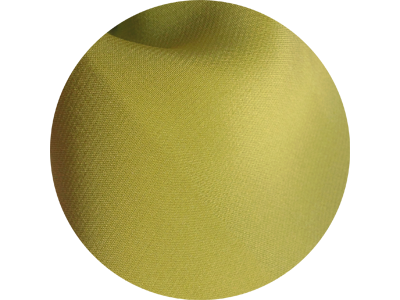
Silk Fabric Color More Than Hundreds Colors Available - citronelle Color Silk Fabric
The hammering process — what it does and why it matters
Standard satin weave aligns the long warp float threads in a uniform direction across the fabric surface, creating the mirror-quality, directional luster that defines conventional satin's appearance. The hammered finishing process deliberately disrupts this uniformity. The woven fabric is subjected to mechanical compression and manipulation — historically performed by actual hammering, today achieved through controlled roller or compaction finishing — that causes the surface threads to shift, crinkle, and reorient in subtly irregular patterns across the fabric width.
The visual result of this process is a satin surface that catches and reflects light from multiple directions simultaneously rather than concentrating it in a single directional sheen. Where standard satin appears uniformly bright from one angle and relatively flat from another, silk hammered satin fabric creates a shifting, three-dimensional light effect that reads differently from every viewing angle and in every lighting condition. In natural light, it appears softly luminous with a warm, slightly irregular surface quality. Under directional artificial light — the lighting of event spaces, photography studios, and evening venues — it develops an extraordinary metallic depth that photographs with exceptional richness and visual drama. The hammered surface is, in the most literal sense, more interesting to look at than flat satin — it contains more visual information, more surface complexity, and more dynamic response to its environment.
citronelle Color in Silk Fabric & Textile
Citronelle is one of the most sophisticated members of the yellow-green family in the luxury silk palette — not the bright, saturated yellow-green of lime or the grey-muted yellow of chartreuse, but something more refined and more complex: a muted, slightly golden yellow-green that carries within it the quality of Mediterranean citrus groves in high summer, of sunlight filtered through dense botanical foliage, of the particular luminous green-gold that exists at the exact boundary between yellow and green in the natural world. It is a color with genuine personality — immediately distinctive without being aggressive, warmly luminous without being sweet, and possessed of an inherent sophistication that makes it one of the most wearable of the unconventional neutrals.
In silk fabric, citronelle undergoes a transformation that no other fiber can replicate. The natural golden undertones of mulberry silk — the subtle warmth that distinguishes silk's luster from the cooler sheen of synthetic alternatives — interact with the citronelle dye in a way that pushes the color toward its most luminous, most botanically vivid expression. What appears on a color card as a somewhat muted yellow-green becomes, in silk, a fabric that seems to generate its own gentle light — warm at rest, vibrant in motion, and possessed of a color depth that rewards closer examination with increasing richness.
Historically, citronelle and its close relatives in the muted yellow-green family have been among the most technically demanding of all natural dye colors to achieve with consistency. The combination of yellow and green pigments required for the citronelle tone is susceptible to differential fading — the yellow and green components age at different rates under light exposure — and achieving a citronelle that remains balanced and true through the life of the fabric requires careful dye formulation. In the finest silk production, this technical care results in a citronelle that develops character as it ages rather than simply fading — deepening slightly toward the green, warming toward the gold, becoming more complex rather than less.
For the contemporary luxury designer, citronelle represents one of the most strategically intelligent color choices available. It sits at the intersection of two major color trend directions — the sustained appetite for botanical, nature-inspired greens and the continuing relevance of warm, golden yellow tones — without belonging definitively to either. It can be styled as a sophisticated neutral alongside earth tones and warm browns, used as a statement color against navy or deep charcoal, or layered with related botanicals for a richly tonal, nature-inspired palette. In hammered satin at 19mm, citronelle's muted complexity is amplified by the irregular surface luster — the color appearing to shift between its yellow and green components as the hammered surface catches light from different directions, making a single fabric appear to contain multiple tones simultaneously.
Ideal applications
The artisanal surface character and 19mm weight of silk hammered satin fabric position it across a broad range of applications where the fabric's own visual distinction is a primary design contribution. Unlike flat satin, whose mirror surface reads as classic and formal in all contexts, hammered satin's irregular luster makes it equally at home in relaxed luxury and formal occasion applications.
- Luxury occasion dresses & gowns
- Fluid evening blouses & tops
- Draped occasion skirts
- Artisanal luxury scarves
- Resort & travel wrap dresses
- Relaxed luxury loungewear
- Statement evening jackets
- Luxury bridal separates
Hammered satin versus flat charmeuse and standard satin
Within the 19mm satin family, hammered satin occupies a distinctive position alongside flat charmeuse and standard satin weaves. Each has a specific aesthetic and behavioral character, and understanding their differences enables confident and precise fabric specification decisions.
vs. Silk charmeuse (19mm): Charmeuse at 19mm shares the same weight as hammered satin but has a smooth, uniform satin face and a matte crepe back. Its luster is directional and consistent — the same brightness across the entire fabric surface from a given viewing angle. Hammered satin's irregular surface creates a multi-directional luster that is less uniformly bright than charmeuse but more visually complex and more dynamic in changing light. Charmeuse is the choice when classic satin elegance is the priority; hammered satin is the choice when artisanal surface character and visual interest are the design statement.
vs. Standard silk satin (19–22mm): Standard satin weaves at comparable weights have the most mirror-quality, uniform luster available in silk — the surface is smooth, consistent, and highly reflective. Hammered satin trades some of this mirror uniformity for surface complexity and the ability to be worn in more contexts without appearing overly formal. A hammered satin dress reads appropriately at both a garden party and a gala; a standard satin dress at the same weight is firmly in formal territory.
The practical distinction: Hammered satin's irregular surface is significantly more forgiving in wear than flat satin surfaces — minor wrinkles, handling marks, and the inevitable surface variations of active wearing are absorbed into the existing texture and become far less visible. For garments that must be worn through long events or travel, this practical advantage of the hammered surface is genuinely significant.
For the scarf designer, 19mm hammered satin is among the most commercially compelling specifications in the luxury silk range. The combination of the hammered surface's artisanal quality with the 19mm weight's substantial drape creates scarves and wraps that communicate luxury immediately and unambiguously — heavier and more richly textured than standard chiffon scarves, more interestingly surfaced than flat satin alternatives, and with a visual complexity that photographs exceptionally well for both editorial and e-commerce applications.
Care & handling
| Method | Guidance |
|---|---|
| 🧺 Washing | Hand wash in cool water with pH-neutral silk detergent, or dry clean. At 19mm, hammered satin is more robust than lighter silk weights — careful hand washing with minimal agitation is well-tolerated. The hammered surface is self-maintaining and does not require special treatment to preserve its irregular texture through washing. |
| 🌡️ Temperature | Cool water only. The hammered finishing process creates a surface structure that, while permanent at normal care temperatures, can be gradually altered by repeated hot-water exposure. Cool washing preserves both the hammered texture and the satin threads' luster over the long life of the fabric. |
| 👕 Drying | Roll gently in a clean dry towel to remove excess moisture. Hang or lay flat to dry away from direct sunlight. The 19mm weight dries evenly and relatively quickly — the hammered surface recovers its full textural character naturally as the fabric dries without any pressing or manipulation. |
| 🔥 Ironing | Low silk setting on the reverse side with a pressing cloth if absolutely necessary — but hammered satin's self-concealing surface texture means that pressing is rarely needed. The irregular surface absorbs casual wrinkles and handling creases into its existing texture, and most wrinkles will fall out naturally with hanging. Never press the hammered face directly. |
| 📦 Storage | Fold loosely or hang on padded hangers. The hammered surface is significantly more forgiving of storage fold lines than flat satin — the existing texture conceals fold marks that would be plainly visible in a smooth satin surface. Store away from rough-textured materials that could snag the satin threads. |
Sewing silk hammered satin
Constructing with 19mm silk hammered satin fabric is a more forgiving experience than working with flat satin at equivalent weights. The hammered surface conceals minor construction imperfections — needle-track marks, seam impressions, and handling traces that would be clearly visible in smooth satin are absorbed into the irregular texture and become far less prominent in the finished garment.
The silk satin that chose character over conformity — that accepted a deliberate irregularity in its surface in exchange for a visual complexity and versatility that smooth satin cannot achieve — 19mm silk hammered satin is the specification for designers who understand that the most interesting luxury is never the most predictable, and that a fabric which appears to have been made by hand, even when it has not, communicates a level of care and intentionality that the most perfect machine-smooth surface can never fully replace.
Silk fabric online by EZSilk offers free silk color card and free silk fabric sample swatch. EZSilk.com is the most trusted silk fabric company, silk scarf manufacturer that offers free silk fabric sample service as well as silk scarf sample while other competitors sell around $3.00 per silk fabric swatch sample.
EZSilk has been known as a luxury silk scarf manufacturers in the United States, a silk necktie manufacturer in the USA. Silk scarf production has been started since 2001 with custom silk scarves.
EZSilk emphasizes only high quality silk product and silk fabric.