Silk's most wearable innovation — the knit construction that combines the natural luxury of mulberry silk with the effortless comfort and fit of jersey, at a weight made for real-world, real-life luxury dressing
Every other silk fabric discussed in this guide is woven — structured on a loom with interlacing threads that create a stable, non-stretch structure. Silk jersey fabric is categorically different. It is knitted — loops of silk yarn interlocked in a continuous structure that stretches in multiple directions and recovers to its original dimensions with each movement of the body. At 160 grams per square meter, silk jersey achieves a weight that is substantial, warm-to-hand, and genuinely opaque, while retaining the natural stretch and recovery that makes jersey the most body-conforming and comfort-forward of all luxury fabric constructions. It is the silk that moves like you move — and does so with the warmth, luster, and sensory refinement that only genuine mulberry silk can bring to a knitted fabric.
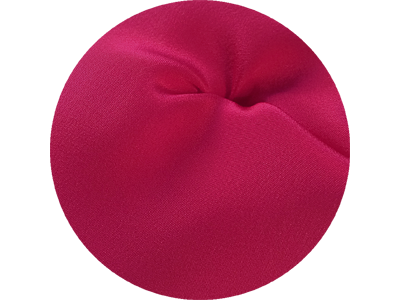
Silk Scarf Fabric Color More Than Hundreds Colors Available
Knitted versus woven — what makes jersey fundamentally different
To understand what silk jersey fabric is, it is essential to understand what makes it categorically different from every other silk fabric in the luxury range. Woven silks — charmeuse, georgette, twill, habotai — are constructed on a loom where warp and weft threads cross each other at fixed angles, creating a stable structure that has minimal natural stretch. Jersey is constructed differently: a single yarn is looped continuously in a chain of interlocked loops, and it is the nature of this loop structure that gives jersey its defining characteristic — multidirectional stretch with elastic recovery.
When silk yarn is used in a jersey knit construction, the result is a fabric that carries all the sensory qualities of silk — the warmth, the natural luster, the protein-fiber softness, the hypoallergenic character — in a construction that yields to the body's movement, conforms to its contours, and returns to its original shape. At 160g/m², the weight ensures the knit is dense enough to be fully opaque, substantial enough to drape with genuine body, and warm enough for year-round wear in temperate climates. It is silk reconceived for a world that expects both luxury and comfort as simultaneous, non-negotiable standards.
Ideal applications
The stretch construction and comfortable wear character of silk jersey fabric at 160g/m² positions it across a broad range of applications that woven silks cannot serve — anywhere that the garment must conform to the body, accommodate active movement, and maintain its appearance through extended everyday wear without the careful management that woven luxury silks require.
- Fitted luxury T-shirts & tops
- Stretch day dresses & midi dresses
- Luxury loungewear & knitwear
- Body-conforming evening wear
- Silk jersey leggings & trousers
- Active luxury sportswear
- Draped knit blouses
- Luxury undergarments & base layers
Why 160g/m² is the optimal silk jersey weight
Silk jersey is produced across a range of weights — from lightweight 80–100g/m² versions for the finest lingerie and hosiery through medium 120–140g/m² weights to the substantial 160g/m² specification and above. The 160g/m² weight represents the sweet spot for luxury everyday and occasion wear — the point at which the jersey has enough body to drape with authority, enough opacity to wear without underlining in most colors, and enough warmth to be genuinely seasonal across a full year of temperate climate dressing.
vs. Lighter silk jersey (80–100g/m²): Lighter weights are more transparent, more delicate, and more suited to intimate wear and fine layering applications. At 160g/m², the jersey has sufficient opacity and body for standalone outer garments across a full range of colors including lighter tones — a practical advantage that significantly expands the design range available to the maker.
vs. Heavier silk jersey (180–220g/m²): Heavier weights have greater thermal warmth and body but begin to lose the fluid, drapey quality that makes silk jersey so compelling for evening and occasion wear. At 160g/m², the fabric maintains its essential lightness and flow while providing enough structure for garments that must hold a defined silhouette through active wear and extended use.
Stretch behavior at 160g/m²: The 160g/m² weight produces a jersey with a measured, composed stretch — it yields to body movement with controlled ease rather than the springy elasticity of lighter weights, giving garments a more structured, polished silhouette in wear that is appropriate for the full range from casual luxury through evening occasion.
For the luxury activewear and resort market, 160g/m² silk jersey addresses a specific and growing demand: consumers who want the sensory quality of silk — the warmth, the softness against skin, the natural thermoregulation — in garments that move with them through yoga practice, resort days, and travel. No synthetic alternative — not the finest modal, not the softest bamboo jersey — provides the same combination of silk's natural performance properties and the physical comfort of a jersey knit construction.
Care & handling
| Method | Guidance |
|---|---|
| 🧺 Washing | Hand wash in cool water with pH-neutral silk detergent. At 160g/m², silk jersey is more resilient than lighter silk weights — careful machine washing in a mesh bag on the most delicate cycle is tolerated, but hand washing preserves both the silk's luster and the jersey's dimensional recovery longest over time. |
| 🌡️ Temperature | Cool water only. Heat is the primary enemy of silk jersey — it weakens the protein silk fibers and can cause the knit structure to lose its elastic recovery permanently through progressive heat-induced fiber relaxation. |
| 👕 Drying | Lay completely flat to dry — never hang silk jersey garments while wet. The knit structure stretches under its own weight when wet, causing permanent lengthening in the direction of hang. Drying flat on a clean towel maintains the garment's original dimensions. |
| 🔥 Ironing | Low silk setting on the reverse side with a pressing cloth, stretching the fabric gently back to its original dimensions as you iron. Silk jersey can lose its shape from repeated wear and washing — careful low-heat ironing while gently stretching restores the knit structure to its correct dimensions. |
| 📦 Storage | Fold and store flat — never hang silk jersey garments for extended storage. The knit structure stretches permanently under its own weight over time if hung. Fold loosely in breathable bags to maintain the garment's shape and the silk fiber's quality. |
Sewing silk jersey
Constructing with silk jersey fabric at 160g/m² requires the same fundamental approach as sewing any knit fabric — seams must be constructed to stretch with the fabric, and standard straight-stitch construction in a knit causes seam failure the first time the garment is worn. The silk fiber adds specific requirements on top of the standard knit construction protocols.
The silk fabric that finally bridges the gap between luxury and lived-in comfort — the construction that allows silk's irreplaceable sensory qualities to accompany the wearer through a full active day rather than being reserved for the still, formal moments of exceptional occasions — 160g/m² silk jersey is the specification for the modern luxury wardrobe that refuses to choose between feeling extraordinary and feeling entirely at ease.
Silk fabric online by EZSilk offers free silk color card and free silk fabric sample swatch. EZSilk.com is the most trusted silk fabric company, silk scarf manufacturer that offers free silk fabric sample service as well as silk scarf sample while other competitors sell around $3.00 per silk fabric swatch sample.
EZSilk has been known as a luxury silk scarf manufacturers in the United States, a silk necktie manufacturer in the USA. Silk scarf production has been started since 2001 with custom silk scarves.
EZSilk emphasizes only high quality silk product and silk fabric.