Where transparency becomes architecture — silk mesh plain's open geometric grid at 12mm turns negative space into a luxury design statement, with genuine mulberry silk at every thread intersection
Most luxury silk fabrics are defined by what they contain — the density of their threads, the richness of their surface, the depth of their weave. Silk mesh plain fabric is defined with equal intentionality by what it does not contain: the open, precisely spaced voids between its woven threads, the geometric grid of negative space that runs across its entire surface as deliberately and as elegantly as the silk threads themselves. At 12mm, silk mesh plain achieves a weight that gives the individual threads genuine substance and a satisfying hand — the silk is perceivable at each intersection, warm and smooth in the way only real mulberry silk can be — while maintaining the open, airy transparency that makes mesh weaving one of the most structurally distinctive constructions in the luxury textile range. It is a fabric simultaneously present and absent, luxurious and light, architectural and ethereal.
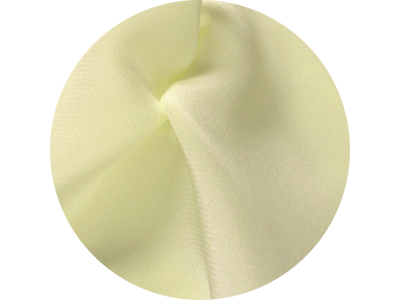
Silk Fabric Color More Than Hundreds Colors Available - Pale Lime Yellow Color Silk Fabric
The plain mesh construction — geometry as luxury
Plain mesh weaving is one of the oldest open-weave textile techniques — a construction in which warp and weft threads are spaced at regular intervals with deliberate open spaces maintained between them, creating a visible grid pattern across the entire fabric surface. Unlike the leno gauze construction, where paired warp threads twist around each weft at each intersection to lock the open cells mechanically, plain mesh relies on thread tension and weave density to maintain its geometric grid. The result is a fabric with a clean, square-celled open structure and flat threads at each intersection — producing a surface of notable geometric clarity and architectural regularity.
In silk mesh plain fabric, this open construction is executed entirely in pure mulberry silk, which transforms the functional mesh structure into a luxury textile. At each thread intersection — the only solid point in a mesh cell — the silk fiber contributes its natural luster, its protein-fiber warmth, and its incomparable sensory quality. Run a finger across the mesh surface and the contact points feel unmistakably like silk; hold the fabric to light and the open cells allow light, air, and vision to pass through with almost no resistance. The combination of silk's irreplaceable material qualities at the thread level with the open mesh structure's architectural transparency creates a fabric of genuine sensory and visual sophistication — one that only genuine silk thread in an open construction can produce.
Pale Lime Yellow Color in Silk Fabric & Textile
Pale Lime Yellow is one of the most luminous and most botanically evocative of the pale, cool-leaning yellows in the luxury silk color palette. It is not the warm, golden yellow of buttercup or the sharp, saturated tone of vibrant yellow — it is something considerably more refined and more unusual: a very pale, slightly cool yellow with the faintest green undertone that gives it the quality of light filtered through young spring foliage, of the particular luminosity that exists at the edge of green and yellow in the natural world at its most tender and most fresh. The green undertone is barely present — enough to distinguish Pale Lime Yellow from pure pale yellow and to give it a more complex, more botanically specific character, but not enough to pull the color into the chartreuse or yellow-green family.
In silk fabric, Pale Lime Yellow undergoes a transformation that demonstrates why certain colors are uniquely suited to this particular fiber. The natural protein luster of mulberry silk interacts with the cool, slightly green-tinged yellow of the dye in a way that amplifies the color's inherent luminosity — silk's ability to appear lit from within is particularly effective with pale, cool, luminous colors, where the fiber's own warmth and the color's cool undertone create a chromatic tension of subtle but significant beauty. In open-weave constructions like silk mesh plain, where light passes through the open cells and the silk threads at the intersections catch and hold it, Pale Lime Yellow develops an almost phosphorescent quality — the color appearing to glow with a soft, spring-like light that densely woven silk fabrics in the same tone cannot achieve.
As a color in the luxury textile tradition, pale yellow-greens have historically been among the most technically demanding to produce with natural dyes. The combination of yellow and green pigments required for these tones — typically achieved through careful overdyeing of yellow with a dilute green, or the use of specific plant-based mordant combinations — is inherently less stable than pure yellow or pure green alone, and the precise balance between the two color components is easily disturbed by small variations in dye chemistry or application. In contemporary silk production, Pale Lime Yellow is formulated with modern acid dyes designed for optimal color consistency and lightfastness in protein fiber, achieving a tonal precision and washing resilience that historical plant-dyed equivalents could not reliably maintain.
In mesh weave constructions at 12mm, Pale Lime Yellow creates effects of particular delicacy and beauty. The color's inherent luminosity is amplified by the open structure's light-transmission quality — the pale yellow-green appearing to intensify where silk threads are present at intersection points and to diffuse softly through the open cells. Layered over white or ivory grounds, Pale Lime Yellow mesh creates a compound surface of cool luminosity; layered over deeper grounds, the pale tone reads almost as a tint — a whisper of color over a more substantial base. For spring and summer fashion applications, Pale Lime Yellow in silk mesh is one of the most fresh, most contemporary, and most appealing color choices available.
Pale Lime Yellow in Fashion & Textile — Current Trends and Usage
Pale Lime Yellow and its close relatives in the pale yellow-green family have experienced a significant and sustained rise in luxury fashion prominence in recent seasons, driven by the broader cultural appetite for botanical, nature-inspired colors and a specific shift in how the fashion industry is approaching pale, luminous tones. Where the pale color palette was for several seasons dominated by beige, cream, and warm nude tones, contemporary luxury fashion has moved toward cooler, slightly more chromatic pale tones — the pale yellows, pale sage greens, and pale blue-greens that reference the natural world's most delicate color moments. Pale Lime Yellow sits at the center of this shift, capturing the freshness of spring botanical color in a tone accessible enough for a wide range of skin tones and versatile enough for deployment across the full spectrum of luxury garment and accessory applications.
On the runway, pale yellow-green tones have appeared with increasing frequency in spring and summer collections across multiple luxury market tiers. In sheer and open-weave silk applications specifically — overlay panels, blouse fabrics, and evening wear inserts — the pale, luminous quality of Pale Lime Yellow creates garment effects of particular contemporary relevance: the color reads as both sophisticated and fresh, botanical without being literal, and sufficiently unusual to signal a considered aesthetic choice without the risk of appearing trend-driven in a way that will date quickly. For open-weave fabrics like silk mesh plain, the color's inherent luminosity is amplified by the structure's light-transmission qualities, making Pale Lime Yellow mesh overlays and inserts particularly photogenic in both editorial and digital fashion contexts.
In the luxury accessories market, pale yellow-green tones have emerged as one of the more commercially interesting directions for the Spring/Summer palette in recent seasons. Silk scarves and wraps in Pale Lime Yellow — whether solid, stripe, or as a ground for more complex print designs — have attracted strong consumer response from buyers seeking alternatives to the more predictable pale neutrals of ivory and pale pink. The color's botanical associations make it particularly resonant in the current cultural climate, where consumers' connection to nature-inspired aesthetics spans across product categories from fashion through home and fragrance.
For the open-weave silk designer working in mesh plain constructions, Pale Lime Yellow offers a compelling combination of contemporary color relevance and structural synergy. The color's luminous, light-transmissive quality is uniquely well-expressed through the mesh's open cells, and its spring-season associations make it a natural specification for the warm-weather overlay and layering applications that silk mesh plain is primarily designed to serve. In embellishment applications — where the open cells of the mesh provide a foundation for beadwork and embroidery — Pale Lime Yellow grounds create a fresh, luminous background that makes warm-toned embellishments appear jewel-like against the cool yellow ground.
Ideal applications
The open structure and 12mm weight of silk mesh plain fabric define its applications with a specific logic: it is most powerful where transparency, layering, and the interplay of fabric over skin or other textiles are design intentions rather than construction challenges. The 12mm weight provides enough silk substance at each thread intersection for a satisfying hand and clear mesh definition without compromising the essential openness that makes mesh weaving distinctive.
- Sheer overlay panels & inserts
- Evening wear transparency effects
- Couture embellishment base
- Beading & embroidery foundation
- Bridal illusion necklines & sleeves
- Fashion-forward blouse panels
- Avant-garde accessory panels
- Luxury window & interior textiles
Silk mesh plain versus silk gauze and lace
In the category of open-weave and transparent luxury textiles, silk mesh plain occupies a specific position alongside silk gauze and traditional lace. Understanding the structural and aesthetic distinctions between these three open-structure fabrics clarifies when each is the most appropriate specification and what each uniquely contributes to the garments and accessories it enters.
vs. Silk gauze (14mm): Silk gauze uses leno weave construction — twisted warp pairs that lock each intersection mechanically, producing a more stable open structure than plain mesh's tension-held grid. Gauze has a slightly more irregular, more organically structured open surface; plain mesh has a more precisely geometric, more architecturally regular grid. Gauze is superior for applications requiring the greatest dimensional stability in the open structure; plain mesh is superior where geometric regularity and clean visual clarity of the open grid are the design priorities.
vs. Lace: Lace achieves its open pattern through knotting, braiding, or needle techniques that create complex figurative or geometric patterns within the open structure. Silk mesh plain has a uniform, non-figurative grid — it is structure without pattern, transparency without ornament. Mesh plain is the appropriate specification when the open structure itself is the design element and no additional pattern complexity is wanted; lace is the specification when the open structure is a vehicle for decorative pattern. Mesh plain is also significantly more structurally consistent than hand-made lace, making it suitable for large-format applications that lace cannot practically serve.
The embellishment foundation advantage: Silk mesh plain's uniform grid makes it uniquely suitable as an embellishment foundation — the regular open cells provide consistent reference points for bead and crystal placement, and the silk thread at each intersection provides a strong, permanent anchor for hand-stitched embellishment work that tulle or synthetic mesh alternatives cannot match in either material quality or longevity.
For the couture embellisher and beadwork specialist, 12mm silk mesh plain represents a significantly superior working surface to the polyester or nylon mesh substrates that dominate commercial embellishment production. The natural silk threads provide genuine luster in the space between embellishments, the protein fiber accepts dye to allow custom color matching with the embellishment palette, and the finished embellished piece drapes and moves with the quality of genuine silk rather than the stiffness and synthetic character of mesh alternatives.
Care & handling
| Method | Guidance |
|---|---|
| 🧺 Washing | Hand wash only in cool water with pH-neutral silk detergent, using the gentlest possible agitation. The open mesh structure is inherently more fragile than dense-weave silks — machine washing, even on the most delicate cycle, creates agitation forces that can distort the geometric grid of the open cells permanently. |
| 🌡️ Temperature | Cool water only. The open structure provides no protection for the individual silk threads — they are fully exposed to the washing environment and are more susceptible to heat damage than threads in a dense weave structure where adjacent threads provide mutual support. |
| 👕 Drying | Press very gently between clean dry towels using minimal pressure to absorb moisture. Lay flat on a clean mesh surface or towel that allows air circulation through the open structure. Avoid compression during drying — distortion of the open cell geometry while wet can become permanent as the fabric dries. |
| 🔥 Ironing | Extreme caution required. The open structure means the iron contacts only the thread intersections, creating highly concentrated localized heat and pressure. Always use a thick pressing cloth and the lowest possible silk setting with the lightest possible contact pressure and the briefest possible contact time. Never press without a cloth barrier. |
| 📦 Storage | Roll loosely around acid-free tissue rather than folding — fold lines concentrate pressure on the threads at the fold point, causing permanent distortion of the open cell geometry adjacent to the fold. Store in breathable bags away from rough-textured materials that could catch on the open structure and snag or distort the threads. |
Sewing with 12mm silk mesh plain
Working with silk mesh plain fabric demands a completely different approach to construction from any dense-weave silk. The open structure changes the behavior of the fabric at every stage — cutting, seaming, finishing, and pressing all require specific techniques adapted to the mesh's unique structural character.
The fabric that makes transparency a design philosophy rather than a construction challenge — that turns the space between threads into an active element of the visual composition with as much creative significance as the threads themselves — 12mm silk mesh plain is the choice for designers who understand that what a fabric leaves visible is sometimes as important as what it covers, and that luxury can be expressed as much through what is open and light as through what is dense and rich.
Silk fabric online by EZSilk offers free silk color card and free silk fabric sample swatch. EZSilk.com is the most trusted silk fabric company, silk scarf manufacturer that offers free silk fabric sample service as well as silk scarf sample while other competitors sell around $3.00 per silk fabric swatch sample.
EZSilk has been known as a luxury silk scarf manufacturers in the United States, a silk necktie manufacturer in the USA. Silk scarf production has been started since 2001 with custom silk scarves.
EZSilk emphasizes only high quality silk product and silk fabric.
Silk Scarf Manufacturer in the USA

EZSilk Offers High-End Silk Scarf
| Beyond providing premium silk fabric by the yard, EZSilk is renowned for our expert custom silk scarf manufacturing services. Whether you're a fashion designer launching a new collection, a brand seeking signature accessories, or an individual looking for bespoke scarves, our team brings decades of specialized knowledge to every project. EZSilk, a trusted name in the silk fabric industry for over 30 years, specializes in high-quality silk scarves crafted from 6A+ silk greige goods. This ensures an exceptional hand feel and vibrant color expression. As the leading silk fabric and scarf manufacturer in the United States, EZSilk brings extensive expertise in silk textiles, offering insights into various silk fabric types and timeless printed scarf designs. EZSilk is only dedicated to high-end silk scarf manufacturing and silk fabric products. |