The silk that holds its own shape — crisp, sheer, and possessed of a structural stiffness that no other lightweight fabric can replicate
Among all the sheer silk fabrics, silk organza fabric stands apart not just in appearance but in fundamental character. Where chiffon floats and habotai drapes, organza holds — it has a stiffness, a self-supporting crispness, that gives it the ability to create volume, structure, and architectural shape entirely on its own. At 6mm, this character is expressed at its most extreme: a fabric so light it is nearly transparent, yet possessed of enough body to stand away from the body, hold a fold, and create the billowing, sculptural effects that have made organza one of the most theatrically powerful fabrics in all of fashion and bridal design.
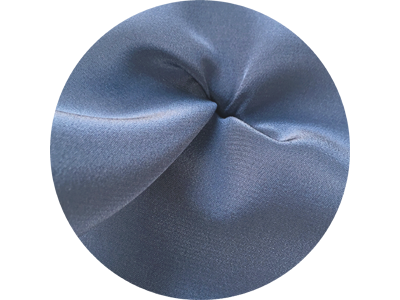
Silk Scarf Fabric Color More Than Hundreds Colors Available
What makes organza structurally unique
The defining quality of silk organza fabric — the quality that separates it from every other sheer silk — is its finishing process. After weaving in a tight plain weave from tightly twisted mulberry silk yarns, organza is finished with a treatment that sets the fiber structure in a stiff, open configuration. The result is a fabric that is simultaneously sheer and crisp — the open weave allows light to pass through freely, while the stiffened fiber structure resists draping under its own weight in the way that chiffon or habotai would. Organza holds its position, creates volume without weight, and returns to its original form after manipulation.
At 6mm, this combination of sheerness and crispness reaches its most ethereal expression. The fabric is nearly weightless in the hand yet resists collapsing flat — a paradox of silk construction that has fascinated designers and couturiers for centuries. Held to light, 6mm silk organza glows with a crystalline, clean luminosity quite unlike the warm glow of habotai or the diffused shimmer of chiffon — a cool, precise quality of light that makes it the natural choice for the most architecturally ambitious garment constructions in the bridal and couture categories.
Ideal applications
The structural self-support of silk organza fabric defines its applications precisely. This is not a draped or layered fabric in the conventional sense — it is a sculpted fabric, used to create volume, architectural silhouette, and dimensional effects that no fluid silk can produce. At 6mm its applications are almost exclusively in the territory of structured fashion construction, couture embellishment, and decorative use where its visual and structural properties are the primary design intent.
- Bridal ball gown skirts
- Couture structured bodices
- Sculptural puff sleeves
- Overskirts & cascades
- Architectural ruffle details
- Bridal veil underlayers
- Floral & 3D appliqué base
- Couture evening gown volume
Organza versus other sheer silks
Designers new to the full spectrum of sheer silk fabrics sometimes conflate organza with chiffon or habotai — all are lightweight, all are associated with bridal and eveningwear, and all share a certain visual delicacy. The differences in behavior and application, however, could not be more significant. Understanding these distinctions is essential for accurate specification and successful construction.
Organza (6mm): Crisp, self-supporting, creates volume and holds shape independently. Does not drape — it structures. The fabric for sculptural, architectural, and volume-creating applications. Sheen is clean and crystalline.
Chiffon (8mm): Soft, fluid, and flowing. Falls under gravity with maximum drape. Creates movement and layering effects. The fabric for floating, soft, feminine applications. Sheen is matte and diffused.
Habotai (8mm): Smooth, slightly structured drape. Falls in soft, gentle folds with a warm natural luster. The middle ground — more body than chiffon, less stiffness than organza. The fabric for simple garments, linings, and printed accessories where smoothness and natural sheen are priorities.
The practical consequence of organza's stiffness in wear is important for designers to anticipate: layered organza skirts create volume that stands away from the body, which is precisely the effect desired in ball gowns and bridal applications. But single layers of organza in fitted garments can feel rigid against the body — organza is almost always used in multiple layers or in combination with softer underlayers for wearable comfort in garments with significant body contact.
Care & handling
| Method | Guidance |
|---|---|
| 🧺 Washing | Dry cleaning is strongly recommended for constructed organza garments — particularly those with significant volume and structure. The stiffening finish that gives organza its crispness can be affected by wet washing, potentially reducing the body that defines the fabric's character. |
| 🌡️ Temperature | If hand washing is necessary for fabric lengths, use cold water only. Heat and aggressive wet treatment degrade both the silk fiber and the stiffening finish that creates organza's distinctive crisp body. |
| 👕 Drying | Shake gently and hang to dry — organza's stiffness means it recovers its shape more readily than fluid silks, and hanging allows the crispness to re-establish as the fabric dries. Keep away from heat sources. |
| 🔥 Ironing | Lowest silk setting with a pressing cloth on the reverse side. Organza is more tolerant of careful pressing than very fine chiffon, but excessive heat can permanently reduce the stiffening finish that creates its body. |
| 📦 Storage | Store constructed garments in large breathable garment bags with sufficient space to prevent compression — crushing collapses the volume that organza is constructed to create. Roll flat fabric lengths rather than folding wherever possible. |
Sewing silk organza
Constructing with 6mm silk organza fabric is technically demanding and distinctly rewarding. The fabric's crispness makes it more stable during cutting than fluid silks — it does not shift or distort under pattern weights — but its tendency to show every needle mark, seam imperfection, and tension variation requires consistent precision throughout construction. Every stitch is visible in the finished piece.
For the bridal designer, the couturier, and the maker who wants to create garments that defy gravity and fill space with silk volume, 6mm silk organza is the irreplaceable tool — the only fabric that is simultaneously as light as air and as structurally capable as the most elaborate internal engineering. It is the silk of grand gestures and lasting impressions.
Silk fabric online by EZSilk offers free silk color card and free silk fabric sample swatch. EZSilk.com is the most trusted silk fabric company, silk scarf manufacturer that offers free silk fabric sample service as well as silk scarf sample while other competitors sell around $3.00 per silk fabric swatch sample.
EZSilk has been known as a luxury silk scarf manufacturers in the United States, a silk necktie manufacturer in the USA. Silk scarf production has been started since 2001 with custom silk scarves.
EZSilk emphasizes only high quality silk product and silk fabric.